
Most hotel advice is written for a night or two. You arrive, you sleep, you check out, and the details barely matter. An extended stay is a different kind of trip. When you are staying a week, two weeks, or a month, the small things stop being small. A room without a proper place to work becomes frustrating by day three. No laundry option becomes a real problem by day five. A rate that looked fine for one night can quietly add up to much more than you expected over three weeks.
This guide covers what to check before you book an extended stay, so the place you choose still feels right on day fifteen, not just on day one. The examples here are two suite-style hotels near Mobile Regional Airport (MOB) in Alabama, but the checklist applies anywhere you are planning a longer stay.
What "Extended Stay" Actually Means
There is no single legal definition of an extended stay, but in practice it usually means a stay of a week or longer, often in a hotel designed for it. Extended-stay hotels are built around a simple idea: you are not just sleeping there, you are living there for a while. That changes the room, the services, and often the price.
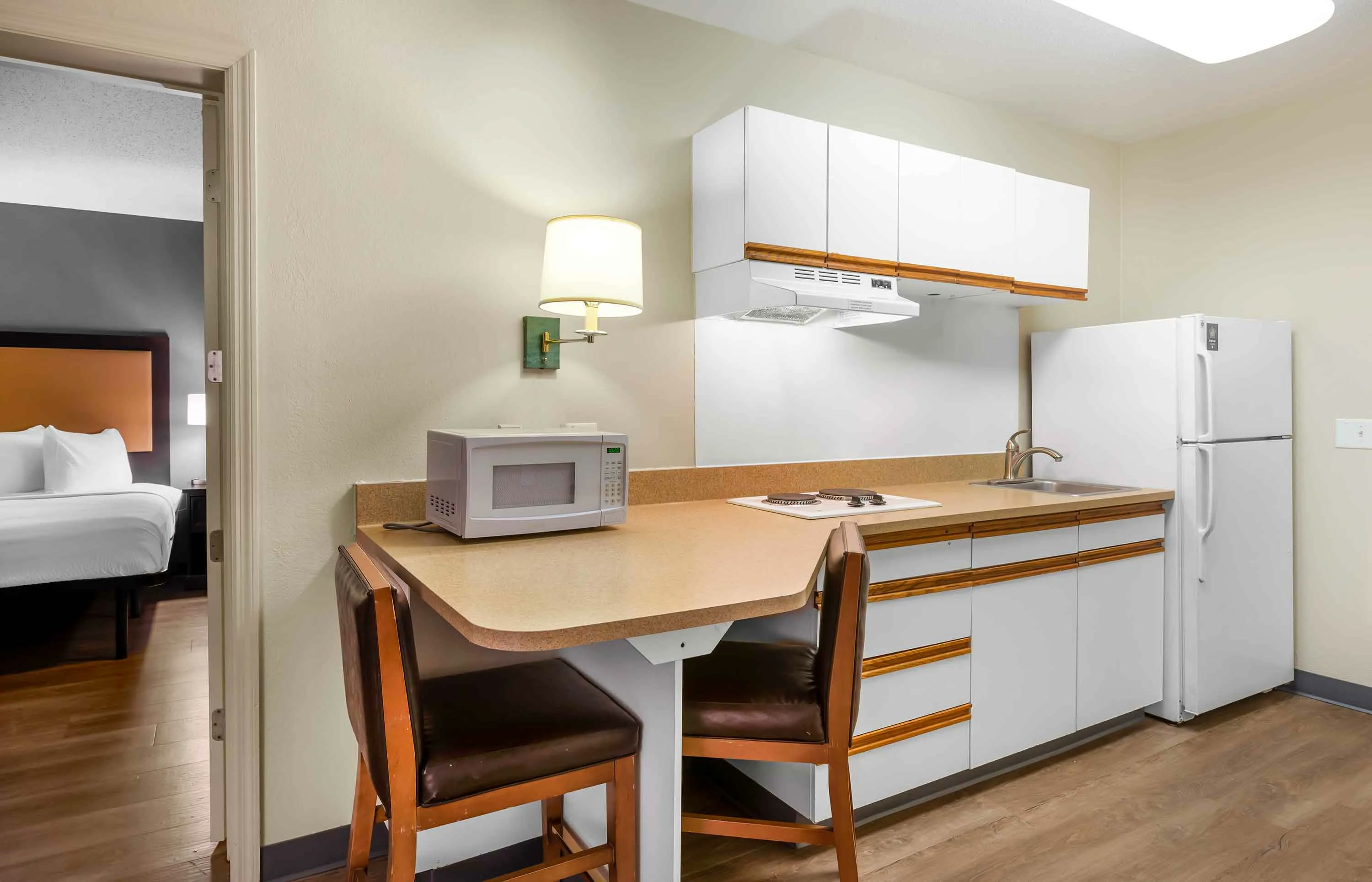
A standard hotel room gives you a bed, a bathroom, and maybe a desk. An extended-stay room typically adds a separate living area, a kitchen or kitchenette, and more storage space. Some properties are purpose-built for long stays, while others are regular hotels that happen to offer suites and weekly rates. Both can work well. What matters is not the label on the building, but whether the room and the services fit the way you will actually live during your stay.
People book extended stays for all kinds of reasons. Work assignments and training courses are common, especially near airports and business parks. Others are relocating and need a base while they house-hunt, visiting family for an extended period, or staying near a hospital during treatment. Some are simply between homes. Whatever your reason, the same rule applies: book for the life you will live there, not just the first night.
The Room: What to Look For
On a short trip, almost any clean room will do. On a long one, the layout matters enormously, so look past the photos and think about how you will use the space day after day.
First, check whether the sleeping area is separate from the living area. A suite with a door or a divider between the bedroom and the sitting area makes a long stay far more comfortable, especially if two people are sharing the room or if one person needs to work while the other rests. A single open room can start to feel cramped after a week, no matter how nice it looks on arrival.
Second, look at the workspace. If you will be working remotely, you need a real desk and a chair you can sit in for hours, not a small table squeezed into a corner. Check whether the room has enough power outlets near the desk, and whether the Wi-Fi is included in the rate. Most hotels now include Wi-Fi, but it is still worth confirming, particularly if you will be on video calls all day.
Third, think about storage. A week of clothes needs more than a couple of drawers. Look for a wardrobe or closet with hangers, drawer space, and somewhere to put a suitcase out of the way. If you are staying a month, ask whether the hotel can provide extra hangers or a luggage rack, since small requests like these make a long stay much easier.
Finally, consider natural light and quiet. A room that faces a busy road or sits next to the elevator or ice machine can wear you down over time. If you have a preference, such as a higher floor or a quieter side of the building, mention it when you book. Hotels cannot always guarantee a specific room, but noting a preference costs nothing and often helps.
Kitchen and Laundry: The Two Things That Matter Most
If there are two features that separate a comfortable extended stay from an expensive, tiring one, they are the kitchen and the laundry. Get these right and almost everything else becomes easier.
A kitchenette typically means a mini-fridge, a microwave, and a coffee maker, sometimes with a small sink. A full kitchen goes further, with a larger fridge, a cooktop or stove, and often a dishwasher. For a stay of a few nights, a kitchenette is plenty. For two weeks or more, a fuller kitchen saves real money, because cooking even a few meals a week is far cheaper than eating out for every meal. Before you book, check exactly what the kitchen includes. "Kitchenette" can mean different things at different hotels, so confirm whether there is a cooktop, what size the fridge is, and whether basic cooking equipment is provided or available on request.
Laundry matters just as much. Packing for a month is impractical, so most long-stay guests plan to do laundry during the trip. Some hotels have a guest laundry room with washers and dryers, some offer a laundry service where staff wash and return your clothes for a fee, and some suite-style rooms include a washer and dryer in the room itself. Each option works, but they cost very different amounts and take different amounts of time. Check which one your hotel offers, what it costs, and what hours it is available, because a laundry room that closes early may not suit your schedule.
Housekeeping is the third service worth checking. Many extended-stay hotels clean less often than standard hotels, sometimes once a week or on request rather than every day. That is normal for long stays and many guests prefer it, since it means fewer interruptions. But if daily housekeeping matters to you, confirm the schedule before you book, and ask whether fresh towels and linen are available between cleans.
How Pricing Usually Works for Longer Stays
Extended stays are often priced differently from short stays, and understanding the structure before you book can save you a surprising amount of money.
Many hotels offer lower nightly rates for longer stays, with weekly or monthly rates that work out cheaper per night than the standard rate. These discounts are not always shown automatically when you search for a single night, so it is worth searching for your full stay length and, if the option exists, asking the hotel directly about a long-stay rate. Sometimes the best rate comes from booking directly with the property rather than through a third-party site, particularly for stays of several weeks.
Taxes are another thing to watch. In many US states and cities, hotel taxes change for longer stays. Some jurisdictions reduce or remove certain lodging taxes after a set number of consecutive nights, often around thirty days, though the exact threshold and rules vary by location. This is not something to assume, but it is worth asking about if your stay is close to a month or longer, since it can change the total noticeably.
Also check what is included in the rate and what is extra. Parking, breakfast, Wi-Fi, and laundry can each be included or charged separately depending on the property. A rate that looks slightly higher but includes parking and breakfast may work out cheaper overall than a lower rate with everything added on. Before you compare prices, compare the full picture: the nightly rate, taxes and fees, and the extras you will actually use.
Finally, read the cancellation terms carefully. Long stays sometimes come with different cancellation rules from short ones, and changing your plans partway through a month-long booking can carry a cost. If your dates are uncertain, a flexible rate may be worth paying for, even if it costs a little more per night.
Two Mobile Airport-Area Examples
Near Mobile Regional Airport, two suite-style hotels in the same Providence Park area are commonly used by travelers staying longer than a few nights. Both sit close to the airport and to the University of South Alabama area, which makes them practical bases for work trips, campus visits, and family stays.
Homewood Suites by Hilton Mobile Airport-University Area is a suite-style hotel, the kind of property where separate living and sleeping areas and in-room kitchen facilities are part of the standard setup. That layout is exactly what makes a longer stay comfortable: room to spread out, space to prepare simple meals, and a living area that is not also your bedroom.
Hampton Inn & Suites Mobile Airport University Area is the neighboring option in the same area, also offering suites alongside standard rooms. For a longer stay, the suite categories are the ones to compare, since the extra living space and kitchen facilities are what matter most once your stay stretches past a few nights.
When comparing the two, or any two extended-stay options, do not just compare the nightly rate. Compare the room layout, the kitchen setup, the laundry options, and what is included in the rate. Two hotels can look similar in photos and differ a lot in how they feel after ten days. If possible, confirm the specific room category you are booking, since "suite" can cover several different layouts at the same hotel.
Your Pre-Booking Checklist
Before you confirm any extended stay, run through this checklist. It takes a few minutes and prevents most of the problems long-stay guests run into.
Length and rate. Search for your full stay length, not just one night, and ask about weekly or monthly rates. Confirm whether taxes change for longer stays at that location.
Room category. Confirm the exact room type, not just the hotel. Check that the sleeping and living areas, workspace, and storage match what you need.
Kitchen. Find out exactly what the kitchen includes: fridge size, cooktop or microwave only, and whether cooking equipment is provided. If you plan to cook regularly, this is the single most important detail.
Laundry. Confirm whether there is a guest laundry room, a laundry service, or in-room machines, and what each costs. Check the hours if you will need evening access.
Housekeeping. Ask how often rooms are cleaned during a long stay and whether fresh towels and linen are available between cleans.
Work setup. If you will work from the room, confirm the desk, chair, outlets, and Wi-Fi. Ask whether Wi-Fi is included and whether there is a faster tier if you need it.
Parking and transport. Check whether parking is included or charged, and how you will get to work, campus, or appointments. Near an airport, also check whether an airport shuttle runs and when.
Pets. If you are bringing a pet, confirm the pet policy, any fee, and any size or breed limits before booking, since these vary widely and are rarely negotiable after arrival.
Cancellation and changes. Read the cancellation terms for your full stay, not just the first night, and check what happens if you need to leave early or extend.
Total cost. Add up the nightly rate, taxes and fees, parking, laundry, and any other extras you will use, then compare that total across hotels rather than comparing headline rates alone.
Extended-Stay Hotel vs. Short-Term Rental
Many long-stay travelers also consider a short-term rental, such as an apartment booked through a rental platform. Both options have real advantages, and the right choice depends on your trip.
A hotel gives you front-desk support, daily or regular housekeeping, on-site staff if something goes wrong, and usually a simpler booking with clearer cancellation terms. You also get amenities like a gym, breakfast, or a business center without arranging them yourself. For stays of one to four weeks, especially for work trips, that simplicity is often worth more than a slightly lower nightly price elsewhere.
A rental usually gives you a full apartment with a complete kitchen, more space, and a residential feel. For stays of a month or more, or for families who want a home-like setup, that can be the better fit. The trade-offs are that service is usually less hands-on, cleaning is often your responsibility, and cancellation terms can be stricter.
A useful rule of thumb is to compare the total cost and the total effort, not just the nightly rate. Add up everything you would pay and everything you would have to arrange yourself in each option, then choose the one that leaves you with fewer chores and fewer surprises during the stay itself.
Mistakes to Avoid
The most common extended-stay mistake is booking the cheapest nightly rate without checking what it includes. A low rate with paid parking, paid laundry, no kitchen, and no breakfast can easily cost more over two weeks than a slightly higher rate that includes those things.
Another common mistake is assuming every room in a hotel is the same. At suite-style hotels, room categories can differ a lot, and the cheapest room may not have the kitchen or living area you are counting on. Always confirm the room category, not just the hotel name.
A third mistake is overpacking. Long-stay guests often arrive with far too much luggage because they assume they cannot do laundry. Once you confirm the laundry options, you can usually pack for a week and wash during the trip, which makes arrival and departure much easier.
Finally, do not skip the pre-arrival message. A short note or call to the hotel confirming your room category, any accessibility needs, and your arrival time can prevent most check-in surprises. For a stay of several weeks, that five-minute call is well worth it.
What to Pack Differently for a Long Stay
Packing for an extended stay is not the same as packing for a weekend. The goal is to bring what you need for the first week and rely on the hotel's laundry and kitchen for the rest, rather than hauling a month of clothes and supplies in suitcases.
Pack a week's worth of clothes you can mix and match, plus one slightly smarter outfit in case you need it for work or dinner. Bring your regular toiletries, but only in travel sizes to start, since you can buy full sizes near the hotel once you arrive. If you cook, a small set of basics such as your favorite coffee, tea, or spices can make the kitchen feel like your own from the first morning. And do not forget chargers, adapters, and any work equipment you need, since those are the things that are hardest to replace quickly in a new city.
Final Word
An extended stay rewards a little preparation more than any other kind of hotel booking. The guests who enjoy long stays the most are not the ones who found the lowest nightly rate, but the ones who checked the kitchen, the laundry, the workspace, and the total cost before they arrived. Once those basics are right, a longer stay can feel less like living out of a suitcase and more like having a comfortable base of your own.
Use the checklist above, compare the full cost rather than the headline rate, and confirm the details that matter to you before you book. If anything is unclear, ask the hotel directly. For a stay of a week or more, the property will usually be glad to answer, and you will arrive knowing exactly what to expect.
