
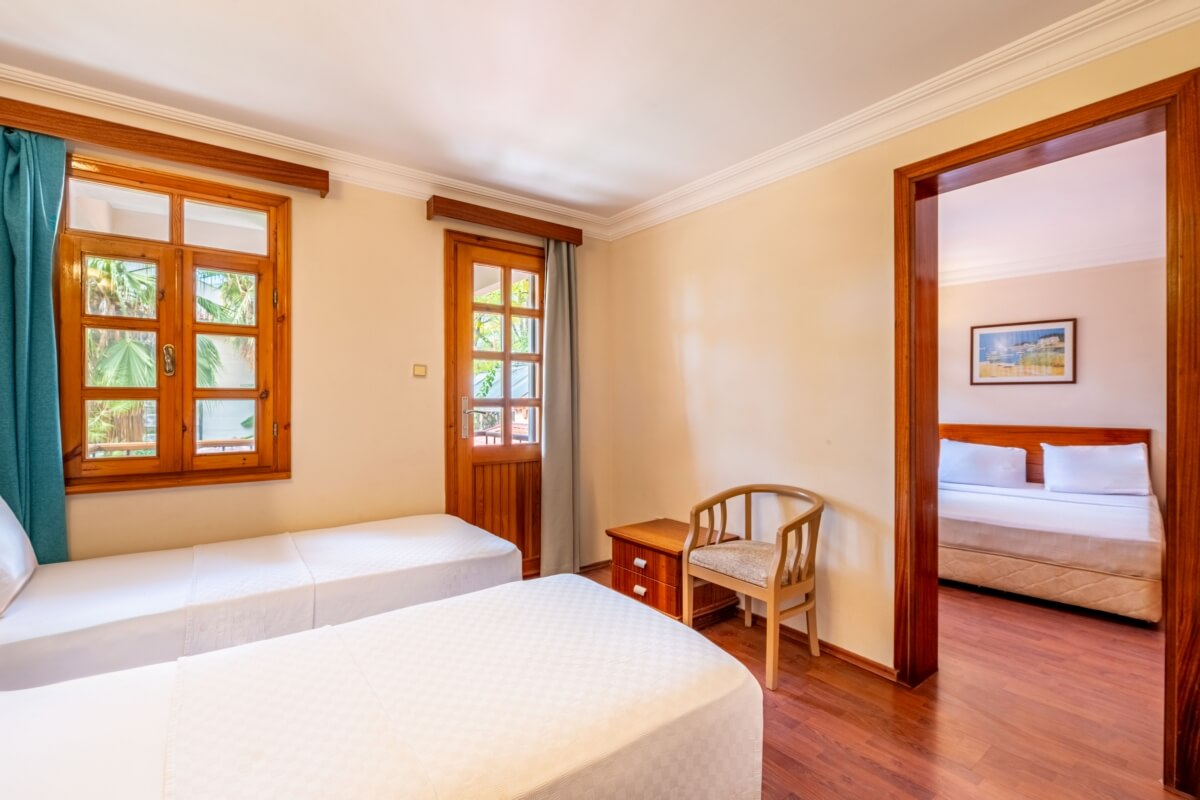
Travelling with a large family or a group sounds simple until you reach the hotel. Suddenly one room is too small, two rooms on different floors feel disconnected, and parents spend the trip walking corridors to check on children, or friends spend it texting each other from opposite ends of the building. Connecting rooms solve this problem elegantly, when they are available and booked correctly.
A connecting room setup gives your group two rooms joined by an internal door, so you get the space of two rooms with the togetherness of one. This guide explains what connecting rooms are, how they differ from similar options, what to check before you book, and how to make sure you actually get them. The example hotel is Hampton Inn & Suites Mobile Airport University Area, a suite-style property near Mobile Regional Airport (MOB) that suits families and groups well.
What Connecting Rooms Actually Are
Connecting rooms are two separate hotel rooms joined by a door in the wall between them. Each room keeps its own entrance from the corridor, its own bathroom, and its own key, but the internal door lets you move between the two rooms without going into the hallway. When the door is open, the two rooms function almost like a small apartment. When it is closed and locked, they are two private rooms again.
This is different from adjoining rooms, and the distinction matters. Adjoining rooms are simply next to each other, with no internal door. They are close, but you still have to go into the corridor to move between them, which defeats much of the purpose for families with young children. When you ask a hotel for connecting rooms, use that exact word, because "adjoining" and "connecting" mean different things in hotel language, and a hotel that promises adjoining rooms has not promised you an internal door.
Connecting rooms are also different from a suite. A suite is a single booking with a living area and a bedroom, usually under one entrance. Connecting rooms are two bookings with two entrances, two bathrooms, and two televisions, which gives a larger group more privacy and more facilities than a single suite, at the cost of paying for two rooms rather than one.
Why Families and Groups Want Them
For families, the appeal is supervision without crowding. Parents can sleep in one room while children sleep in the other, with the internal door open for easy checking during the night and closed for privacy when everyone is settled. Younger children stay close enough to feel safe and for parents to hear them, without the whole family sharing one room's beds, bathroom, and floor space. Teenagers get a sense of independence while still being right next door.
For groups of friends, connecting rooms offer a shared social space with private retreats. The group can gather in one room in the evening, then retire to their own rooms to sleep, without anyone having to walk the corridors late at night or carry belongings between floors. For wedding parties, sports teams, and work teams traveling together, the same logic applies: together when you want to be, separate when you do not.
There is also a practical benefit that people underestimate: two bathrooms. A family of five or six sharing one bathroom spends a lot of the morning waiting. Two rooms mean two bathrooms, two televisions, and twice the storage space, which makes mornings faster and evenings calmer. On a trip of several nights, that daily difference adds up to a noticeably better stay.
The Most Important Fact: Connecting Rooms Are Usually a Request, Not a Guarantee
Here is the detail that causes the most disappointment. At most hotels, connecting rooms cannot be booked as a guaranteed room category in the same way you book a king room or a two-queen room. They are a request attached to two separate room bookings, and the hotel fulfills requests based on availability, floor layout, and how many other guests have asked for the same thing.
That means you can do everything right and still arrive to find your rooms are not connected, especially if you arrive late, if the hotel is busy, or if the connecting pairs on your floor are already occupied. This is not the hotel breaking a promise. It is the nature of a request-based system, and understanding that before you book changes how you should approach it.
The way to maximize your chances is straightforward. Book early, because connecting pairs are limited and early requests are usually handled first. Book both rooms under the same reservation or the same name, so the hotel's system links them together. Put the connecting request in writing on the booking, not just in a phone call that may not be recorded. Then contact the hotel directly a few days before arrival to confirm the request is noted, and again on the day of arrival to confirm it is assigned. Hotels are far more likely to fulfill a request they have seen three times than one they saw once in an online booking form.
If connecting rooms are essential rather than just preferred, say so clearly when you book, and ask what happens if they are unavailable. Some hotels can offer a suite as an alternative, or rooms directly across the corridor from each other. Knowing the fallback before you arrive is much better than discovering it at check-in with tired children in tow.
Comparing Your Options
Connecting rooms are one of several ways to house a larger group. This table compares them directly, so you can see which option fits your trip.
|
Option |
How it works |
Privacy |
Space |
Cost tendency |
Best for |
|---|---|---|---|---|---|
|
Connecting rooms |
Two rooms joined by an internal door |
Good, door locks from either side |
Two full rooms, two bathrooms |
Two room rates |
Families with children, groups wanting togetherness and privacy |
|
Adjoining rooms |
Two rooms next to each other, no internal door |
Good, but you use the corridor to move between rooms |
Two full rooms, two bathrooms |
Two room rates |
Groups who want proximity without needing an internal door |
|
One suite |
Single booking with living area and bedroom |
Less, shared entrance and often one bathroom |
One larger unit |
One suite rate, often less than two rooms |
Small families or couples wanting extra space |
|
Two separate rooms |
Two rooms booked independently, possibly on different floors |
Good, but disconnected |
Two full rooms |
Two room rates |
Adults traveling together who do not need to be close |
|
One large room |
Single room with maximum occupancy |
Poor for mixed ages and schedules |
One room, one bathroom |
One room rate |
Small groups on a tight budget for a short stay |
The table makes the trade-off clear. Connecting rooms cost more than a single room or a suite, because you are paying for two rooms. What you gain is the combination of togetherness and privacy that no other option offers: children close but not in your bed, friends together but not sharing a bathroom, and a group that can gather and disperse without leaving the rooms.
What to Check Before You Book
Beyond the connecting request itself, several details affect whether connecting rooms will work for your group.
Room combination. Connecting pairs are not always the same room type. A common setup is a king room connected to a two-queen room, which suits parents in one room and children in the other. Another is two rooms of the same type. Ask which combinations the hotel offers, and whether you can choose which room type goes on each side of the door.
Door and locks. Ask how the connecting door locks and who can open it. Typically, each side has its own lock, so either room can secure the door independently. That matters for families, because parents may want the door open at night and locked during the day, or for groups where not everyone wants free access to both rooms at all times. Confirm the arrangement before arrival so there are no surprises.
Noise between rooms. An internal door is thinner than a wall, so sound travels more easily between connecting rooms than between standard rooms. For families, that is usually a benefit, since parents can hear children. For groups with different sleep schedules, it can be a drawback. If one part of your group sleeps early and another stays up, the connecting door may carry more noise than you expect.
Bathroom and facility duplication. Two rooms mean two bathrooms, which is a plus, but check whether both rooms have the same facilities. At some hotels, one side of a connecting pair may be an accessible room or a room with a different layout, which can matter if someone in your group needs specific features.
Cost and cancellation per room. Since connecting rooms are two bookings, they may have separate cancellation terms, and cancelling one room does not automatically cancel the other. Check the terms for each room, and make sure both rooms are booked under conditions you can live with. If one room is non-refundable and the other is flexible, a change of plans could leave you paying for a room you no longer need.
Floor and location. Connecting rooms are only useful if they are actually connected, which means they must be on the same floor in a pair designed for it. Ask the hotel to note that both rooms should be in a connecting pair, not just on the same floor, since same-floor rooms without an internal door are adjoining, not connecting.
The Example: Hampton Inn & Suites Mobile Airport University Area
The Hampton Inn & Suites Mobile Airport University Area is a useful example for families and groups staying near Mobile Regional Airport. It sits in the Providence Park area, close to the airport and to the University of South Alabama area, which makes it practical for family visits, campus trips, and group travel through MOB.
As a suite-style property, it offers both suites and standard rooms, which gives a family or group flexibility in how they combine rooms. A family might pair a suite with a standard room, using the suite's living area as the group's gathering space and the standard room as additional sleeping space. A group of friends might take two rooms of the same type for equal privacy. The property's researched page also notes free hot breakfast, free parking and Wi-Fi, a complimentary airport shuttle, and an outdoor pool, which are the kinds of inclusions that make a multi-room stay simpler and cheaper overall, since breakfast for a whole group is one less meal to arrange each day.
When using any hotel as your connecting-rooms base, apply the same checks described above: put the connecting request in writing, book both rooms under the same name, confirm directly with the hotel before arrival, and ask about the room combination and door arrangement. The hotel's location and room types make it a strong candidate for a family or group stay, but the connecting arrangement itself should always be confirmed, since it depends on availability on your dates.
Booking Tips That Improve Your Chances
A few habits reliably improve the odds of actually getting connecting rooms. Book as early as you can, since connecting pairs are limited and early requests get priority. Book both rooms together, under one name and one reservation where the booking system allows it, so the hotel sees them as a pair rather than two unrelated bookings.
Contact the hotel directly after booking online. Online booking forms often have a small comments box that may not reach the room-assignment team, while a direct message or call to the hotel creates a record the front desk can act on. Mention the ages of children if relevant, since hotels often prioritize connecting rooms for families with young children.
Arrive together and check in together. If one part of your group arrives hours before the other, the hotel may assign rooms separately before the second party arrives. Checking in together lets the front desk assign the connecting pair in one step.
Finally, have a fallback in mind. If connecting rooms are unavailable on arrival, ask about rooms across the corridor from each other, a suite as an alternative, or a room move the next day when a connecting pair frees up. Hotels can often solve the problem partially even when they cannot solve it fully, but only if you ask calmly at check-in rather than discovering the issue late at night.
Frequently Asked Questions
What is the difference between connecting rooms and adjoining rooms?
Connecting rooms are joined by an internal door you can walk through. Adjoining rooms are simply next to each other with no internal door, so you must use the corridor to move between them. Always ask for "connecting" specifically if you want the internal door.
Are connecting rooms guaranteed when I book them?
Usually not. At most hotels, connecting rooms are a request, not a guaranteed category. Your chances improve with early booking, booking both rooms together, and confirming directly with the hotel before arrival, but availability on your dates ultimately decides it.
Do connecting rooms cost extra?
There is usually no extra fee for the connecting door itself, but you are paying for two rooms, so the total is two room rates. Some hotels may charge more for specific connecting pairs or room combinations, so confirm the total for both rooms before booking.
Can I connect a suite to a standard room?
At many hotels, yes, if a connecting pair exists in that combination. Ask the hotel which room types can be connected, since not every pair in the building is designed as a connecting pair.
How do the locks on a connecting door work?
Typically, each side of the door has its own lock, so either room can lock it independently. Confirm the arrangement with your hotel, especially for families who want the door open at night and locked at other times.
What if our rooms end up on different floors?
Ask at check-in whether a connecting pair or rooms across the corridor are available, or whether a move is possible the next day. If connecting rooms were essential, raise it politely at check-in rather than waiting, since room assignments are easiest to change before you have unpacked.
Are connecting rooms good for families with young children?
Yes, they are often the best option. Children sleep close enough for parents to hear and check on them, while parents keep their own room and bathroom. The internal door gives supervision without crowding everyone into one room.
Should I book connecting rooms or one suite for my family?
For a small family on a short stay, a suite is often enough and cheaper. For a larger family, a longer stay, or a group that needs two bathrooms and separate sleeping areas, connecting rooms are usually the better fit despite costing more.
Final Word
Connecting rooms are the best answer to a common travel problem: how to keep a family or group together without squeezing everyone into one room. They give you two bathrooms, two televisions, private sleeping areas, and a door between them that makes the whole setup feel like a small apartment.
The key is to treat them as a request to manage, not a category to assume. Book early, book both rooms together, put the request in writing, confirm directly with the hotel, and check in together. Ask about the room combination, the door locks, and the cancellation terms for each room.
Do that, and your family or group gets the best of both worlds: togetherness when you want it, privacy when you need it, and a trip where nobody spends the week walking corridors to find each other.
