
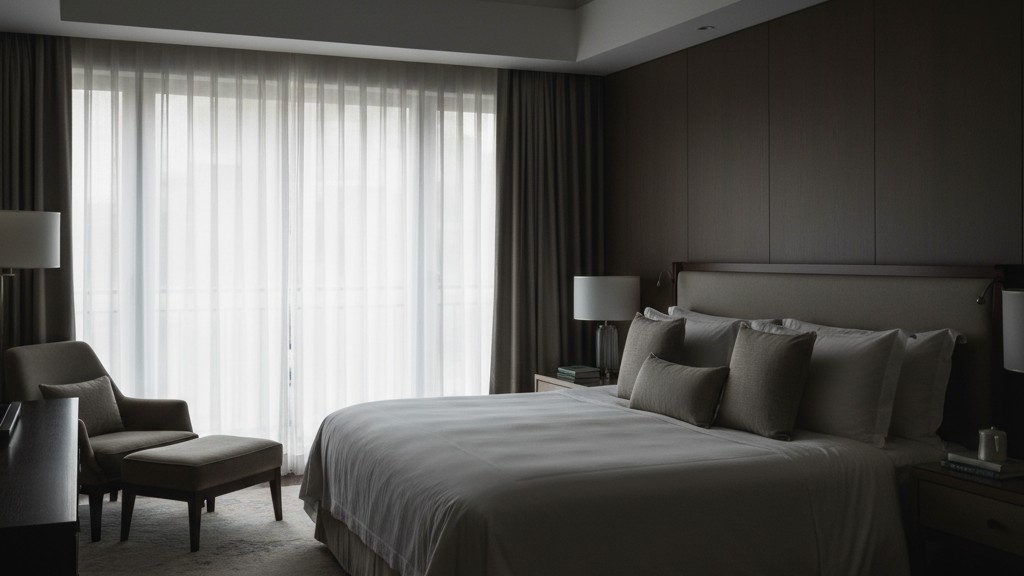
A noisy hotel room can ruin an otherwise good trip. One night of corridor traffic, elevator chimes, or street noise leaves you tired the next day, and several noisy nights can spoil a whole stay. The good news is that a quiet room is usually not a matter of luck. Hotels know which rooms are quiet and which are not, and travelers who ask for the right things, in the right way, at the right time, get quieter rooms far more often than travelers who say nothing.
This guide explains where hotel noise comes from, exactly what to request, how to ask so the hotel can actually help, and what to do if your room turns out noisy anyway. The example hotel is Hampton Inn & Suites Mobile Airport University Area, a suite-style property near Mobile Regional Airport (MOB) that works well for travelers who want a calm stay near the airport.
Where Hotel Noise Comes From
Understanding the sources of noise helps you ask for the right room, because different requests solve different problems.
Corridor noise is the most common complaint. Guests walking past, talking, rolling luggage, and opening and closing doors all carry into rooms near the corridor, especially rooms close to the elevator or stairwell, where foot traffic concentrates. Housekeeping carts in the morning add to it, with wheels, vacuums, and staff conversation.
Elevator and ice machine noise clusters around specific points. Elevator lobbies generate chimes, doors, and waiting guests at all hours. Ice machines hum and clatter, and guests using them late at night add conversation and footsteps. Rooms next to or across from these facilities hear them the most.
Street and outside noise depends on which side of the building your room faces. Rooms facing a busy road hear traffic, sirens, and late-night activity. Rooms facing a courtyard, parking area, or quieter side of the property usually hear much less. At airport-area hotels, aircraft noise is another outside source, though it varies greatly by the hotel's position relative to flight paths and by the time of day.
Facility noise comes from the hotel's own amenities. Rooms above or beside a pool, gym, restaurant, bar, or event space hear activity from those areas, often in the evening when you are trying to sleep. Rooms near a fitness center may hear equipment and early-morning users. Rooms near event rooms may hear music or gatherings on event nights.
Neighbor and building noise is harder to predict. Thin walls carry television sound and conversation from next door. Plumbing carries water sounds through shared walls. Heating and cooling systems hum, rattle, or cycle on and off. Upper floors avoid footsteps from above, but no room is completely immune to a loud neighbor.
Knowing these sources lets you make specific requests instead of a vague one. "A quiet room, please" is a start, but "a high-floor room away from the elevator and ice machine, on the quieter side of the building" gives the hotel something concrete to work with.
What to Request: The Quiet Room Checklist
These are the requests that most reliably produce a quieter room. You do not need to ask for all of them, but asking for the ones that matter most to you makes a real difference.
A high floor, but not necessarily the top floor. Higher floors are generally quieter because they are farther from the lobby, street, and ground-level facilities, and they have less foot traffic. The top floor has the added advantage of no footsteps from above. However, the top floor can sometimes be closer to rooftop equipment, and higher floors mean longer elevator waits. A high floor, a few floors up rather than the very top, is usually the sweet spot.
Away from the elevator and stairwell. Rooms near elevators and stairs get the most corridor traffic at all hours. Ask for a room at least several doors away from the elevator lobby, or at the far end of a corridor, where foot traffic is lightest. End-of-corridor rooms are often the quietest on a floor, though they mean a longer walk from the elevator.
Away from the ice machine and vending areas. These are small noise hubs that operate around the clock. A room next to one hears the machine itself plus every guest who visits it. Ask the hotel to keep you away from these areas, especially if you are a light sleeper.
On the quieter side of the building. If the hotel has a street side and a courtyard or parking side, the courtyard side is usually quieter. If one side faces a pool or event space, the opposite side is usually calmer in the evening. Ask which side is quieter and request a room on it.
Away from event rooms, bars, and restaurants. If the hotel has event space, a bar, or a restaurant, rooms directly above or beside them can be noisy in the evening. This matters most on weekends and event nights. Ask whether any events are scheduled during your stay and whether your room is near the event space.
Away from the pool if you sleep early. Pools are daytime and early-evening noise sources, with splashing, conversation, and music. If you go to bed early, a room facing away from the pool is a better choice. If you plan to use the pool yourself, proximity may matter more than quiet, so weigh the trade-off.
How to Ask So the Hotel Can Help
How you ask matters as much as what you ask. Hotels handle many requests, and the ones that are specific, written down, and repeated at the right times get fulfilled most often.
Put it in writing when you book. Use the special-requests or comments box on your booking to write a clear, specific request, for example: "Quiet room requested: high floor, away from elevator and ice machine, on the quieter side of the building if possible. Light sleeper." A written request enters the hotel's system and travels with your reservation, while a verbal request made once may be forgotten.
Contact the hotel directly before arrival. A short message or call a few days before your stay confirms that the request is noted and lets you add details, such as whether you sleep early or are sensitive to street noise. Hotels can often assign rooms a day or two in advance, so contacting them before that assignment happens is more effective than asking at check-in, when rooms are already allocated.
Repeat the request at check-in, politely. When you arrive, mention your quiet-room request again and ask what room you have been assigned. If the room is near the elevator or on a low floor despite your request, this is the moment to ask whether a quieter room is available. Asking before you unpack and settle in makes a room change easy for the hotel. Asking after you have unpacked makes it harder for everyone.
Explain why, briefly. A short reason helps staff prioritize. "I'm a light sleeper" or "I have an early flight and need a good night's sleep" gives the front desk a reason to choose a quieter room for you over another guest who did not ask. You do not need a long explanation. One sentence is enough.
Be realistic about guarantees. Like connecting rooms, quiet-room requests are usually requests, not guarantees. Hotels cannot promise a specific room before arrival, because occupancy and maintenance change daily. What you are doing is maximizing your chances, and the steps above do that effectively. If a quiet room is essential, for example for health reasons, say so clearly when you book and ask what the hotel can do to help.
Noise Sources and What to Ask For
This table maps each common noise source to the request that addresses it, so you can pick the requests that fit your situation.
|
Noise source |
What to request |
How much it usually helps |
|---|---|---|
|
Corridor foot traffic |
Room away from the elevator, end of corridor |
A lot, foot traffic drops sharply away from the lobby |
|
Elevator chimes and doors |
Room several doors from the elevator lobby |
A lot, elevator noise is very localized |
|
Ice machine and vending |
Room away from ice and vending areas |
A lot, both machine noise and late-night visitors disappear |
|
Street traffic |
Room on the courtyard or quieter side, higher floor |
A lot for traffic, less for sirens, which carry further |
|
Pool and outdoor areas |
Room facing away from the pool |
A lot in the evening, when pool use peaks |
|
Event rooms and bars |
Room away from event space, ask about scheduled events |
A lot on event nights, little difference otherwise |
|
Neighbors through walls |
Room at the end of a corridor, fewer shared walls |
Some, but neighbor noise is the hardest to predict |
|
Footsteps from above |
Top floor or high floor |
A lot, no upstairs neighbor means no footsteps |
|
Plumbing and HVAC |
Room away from service areas, report rattling systems promptly |
Some, and maintenance can often fix a noisy unit |
|
Aircraft near airports |
Room on the quieter side, ask about flight-path exposure |
Some, aircraft noise varies by position and time of day |
Use this table to build your request. If street noise bothers you most, prioritize the building side and floor. If corridor noise bothers you most, prioritize distance from the elevator. Tailoring your request to your sensitivity makes it more likely the hotel can match you with a room that works.
The Example: Hampton Inn & Suites Mobile Airport University Area
The Hampton Inn & Suites Mobile Airport University Area is a practical example for travelers who want a calm stay near Mobile Regional Airport. It sits in the Providence Park area, close to the airport and to the University of South Alabama area, which makes it convenient for family visits, campus trips, and flights through MOB without being in the middle of the busiest part of the city.
As a suite-style property, it offers both suites and standard rooms, which gives travelers a choice of room size and layout. Its researched page notes free hot breakfast, free parking and Wi-Fi, a complimentary airport shuttle, and an outdoor pool. Those inclusions matter for a quiet stay in a specific way: the pool is an amenity to enjoy during the day, but a traveler who sleeps early should request a room facing away from it, while a traveler who wants easy pool access may prefer to be closer. The same logic applies to the airport shuttle and parking areas, which generate some coming and going, mainly in the morning and evening.
Because it is an airport-area hotel, aircraft noise is worth a question when you book. Ask which side of the building is quieter and whether your room faces away from the busiest approach direction. The hotel's staff will know the answer for their property, and that one question can make the difference between a restful night and a restless one.
Apply the same approach here as anywhere else: put your quiet-room request in writing, confirm it directly with the hotel before arrival, and repeat it at check-in. The hotel's location and room options make it a strong choice for a calm airport stay, but the specific room assignment is what determines how quiet your night actually is.
If Your Room Turns Out Noisy
Sometimes, despite your best requests, the room you get is noisy. What you do next matters, and acting early gives you the most options.
Call the front desk promptly. If corridor noise, a loud neighbor, or a rattling air conditioner is keeping you awake, call the front desk rather than waiting it out. Hotels can often move you to another room, speak to a noisy neighbor, or send maintenance to fix a rattling unit. They cannot help with a problem they do not know about.
Ask for a room move before you unpack. If the room's location is the problem, for example it is next to the elevator or faces a noisy street, ask about moving as soon as you notice, ideally before you have fully unpacked. Room moves are much easier early in a stay than late at night when fewer rooms are available and staff are busier.
Use simple tools for the night. If a move is not possible, earplugs, a white-noise app on your phone, or the room's own fan can mask a surprising amount of noise. These are not substitutes for a quiet room, but they can turn an unbearable night into a bearable one, and they cost almost nothing to pack.
Note it for next time. If a particular room or floor was noisy, remember it. On a return visit, you can request a different floor or side of the building, and the hotel may note your preference on your profile. Travelers who stay at the same property repeatedly often get better room assignments over time, because the hotel learns what works for them.
Frequently Asked Questions
Can I guarantee a quiet room when I book?
Usually not. Quiet-room requests are requests, not guarantees, because room assignments depend on occupancy and maintenance. Booking early, writing a specific request, confirming directly with the hotel, and repeating it at check-in give you the best chance.
Which floor is quietest?
Generally, a high floor is quieter than a low floor, and the top floor avoids footsteps from above. A few floors up is often the sweet spot, since the very top floor can sometimes be near rooftop equipment.
Are rooms near the elevator really noisier?
Yes, noticeably. Elevator lobbies generate chimes, doors, waiting guests, and foot traffic at all hours. Rooms several doors away, or at the end of a corridor, are usually much quieter.
Is a street-facing or courtyard-facing room quieter?
Usually the courtyard or parking side is quieter, since it faces away from road traffic. If the hotel has a pool or event space on the courtyard side, weigh that against street noise when choosing.
What should I do if my room is noisy after check-in?
Call the front desk promptly and ask about a room move, especially before you have fully unpacked. Hotels can often solve the problem, but only if they know about it early.
Do earplugs or white-noise apps actually help?
Yes, for many travelers they help a lot, especially with steady background noise like traffic or corridor sounds. They work best as a backup, not as a replacement for requesting a quiet room in the first place.
Are airport hotels noisier than other hotels?
Not necessarily. Airport hotels vary greatly by their position relative to flight paths and by their construction. Ask the hotel which side is quieter and whether aircraft noise affects certain rooms, rather than assuming an airport hotel will be loud.
Should I mention that I am a light sleeper?
Yes. One sentence, such as "I'm a light sleeper and would appreciate the quietest room available," helps staff prioritize your request. It is a common and well-understood reason.
Final Word
A quiet hotel room is not a luxury reserved for lucky travelers. It is the result of knowing where noise comes from, asking for specific things, and asking at the right times. Request a high floor away from the elevator and ice machine, choose the quieter side of the building, and put your request in writing, confirm it before arrival, and repeat it at check-in.
Pair that with a backup plan: the front desk's number in your phone, earplugs in your bag, and a willingness to ask for a room move early if the first room does not work. With those habits, you will sleep better on far more trips, and the difference a good night's sleep makes to the next day is worth the small effort of asking.
